
The Odyssey - Review

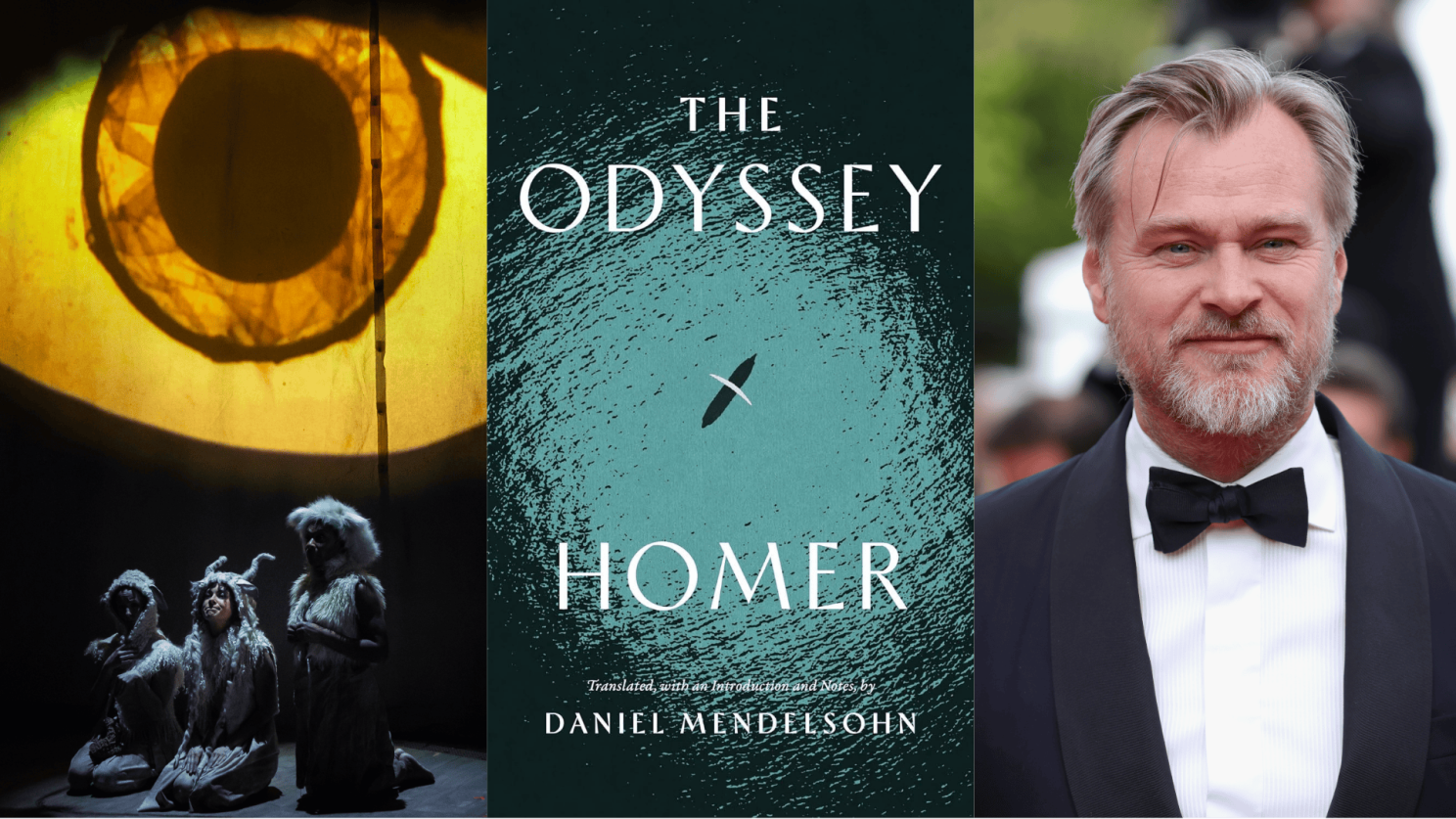
Much of the appeal of The Odyssey is a kind of vertigo across epochs, the antiquity of the storytelling itself.
Christopher Nolan’s adaptation is grand on the screen, but never quite gives a slight alien quality to characters’ lives and experiences, at a remove from our own across such time, nor an ethereal sense of an ancient world, nor the sense of romantic adventure, nor a great stirring of the imagination.
When the film is bringing out the best in its source material it is enthralling. The early framing is excellent, a sinuous interweaving through Odysseus’ haunted lotus flower reverie with Calypso, recollections of the siege of Troy, and its aftermath, and Telemachus’ and Penelope’s unstable political position. Jennifer Lame’s editing has become key to the movement of Christopher Nolan’s films. In Oppenheimer and now The Odyssey, conversations, memories and parallel storylines are often folding into one another.
The Cyclops is a real treat – rather than a shaggy monster or troll he is made unnerving by his richly rendered sentient expressiveness. He is not made to look scary in the way we are so accustomed to in large scale beasts. His scariness comes from how palpable he is. His features are grotesque, but there is no effort to make him look malevolent – there is the genuine sense of a consciousness, and the practical scale of him means there is an awesome sense of heft and depth. The sound design on the Cyclops’s howls – dissonant, unworldly, are genuinely disturbing.
The Trojan Horse material – one of the most revisited and evoked stories in history is made to feel fresh and original, the imagery of the horse submerging into the tide is striking and makes the old tale vivid and exciting.
Anne Hathaway as Penelope, and Robert Pattinson as Antinous, are faced with a slightly difficult task, because Odysseus and his adventures are the story’s natural centre of gravity, and if not handled well, the scenes in the court of Ithaca could have felt like a recurring imposition upon the story we’d rather watch. But the tensions – the passage of time and power vacuum left by Odysseus, the growing belief he is not returning, and the pressure upon Penelope to choose a new husband – accrue and sit nicely at a point of tension. The situation feels combustible, and Pattinson’s insidious manoeuvering and general presence sustains the scenes nicely.
However, while there’s much to admire, the film also has a lot of issues.
Matt Damon never shines, and he has never really suited roles where he is an out and out alpha male persona – nor does he channel the wily cunning of Odysseus in the poem. He has a sympathetic grounded sincerity – but that’s not really Odysseus.
The film’s main issue isn’t that it’s overly long – the Odyssey should be a vast and sweeping epic – it’s that it’s long, but also trying to hustle a lot of its material through a little too quickly. Samantha Morton’s Circe has an enigmatic menace, but the whole episode is compressed so that she goes through three intense emotional states and reckonings within her modest time on screen, that feels a little jumpy and overly efficient.
The prophecies in Hades are fine, without feeling too compelling, or giving a sense of dread or wonder. There is an odd, uncertainty of the cast’s understanding of fantasy elements – whether monsters and witches and the supernatural are just accepted phenomena. There’s a slight tonal glitch here that never quite goes away.
Things soon fray around the edges. The whirlpool sequence is not especially thrilling, and is far from an awe-inspiring abyss – in fact, it comes across as a bit rote. The Sirens are disappointing – an opportunity for music chilling in its luring melodic beauty is squandered, and instead there is just a scene overlaid with ordinary score, and imagery of Matt Damon making tormented faces. The Sirens themselves are barely glimpsed. A scene with such enduring cultural influence, stirring the imagination down through the ages, falls short here, as Nolan evidently thought it would be sophisticated to allow the audience to imagine the song, and the Sirens themselves – but we have the poem for that, and watching a film spectacle, a bolder effort would have been worthwhile.
Similarly, the sequence of the Cattle of the sun god Helios feels almost obligatory, with little actual drama or intensity or narrative propulsion, just something that, out of fidelity to the text, gets the story from A to B.
The sense of otherworldliness this film promises – the mystique of the ancient world, only occurs in glimpses and short spells. There is none of the decadence of Fellini’s Satyricon, none of the Dionysian, little of Ovid’s Metamorphosis shapeshifting, little of the scale of cities or civilisations; even temples and the interior of Troy seem relatively modest.
The dialogue and interplay among Odysseus and his crew is very stilted, there are pinched little exchanges, often almost toneless, with a sense there was a lot of ADR.
Lupita Nýongo as Helen of Troy still fails to convince, for all the reasons that have been gone through online – even accounting for Nolan’s invocation of a semi-mystical world, or a dreamlike atmosphere, or artistic license in conjuring up an exoticism aesthetically, and all the rest – it still just feels distractingly incongruous. Some people online have pointed to her modest screentime, as if to say this downplays the issue – but in a wider sense it doesn’t, because of precedence. It means that – from here on out, every film or show that tries the same race-swapping in established texts will inevitably point to The Odyssey and say: well, Christopher Nolan did it, and it worked, and he’s an important respected filmmaker.
The diversity is jarring elsewhere. Travis Scott feels intensely modern, Himesh Patel tries to assure a scared old man that he and his fellow sailors mean him no harm. He points to the black man next to him, and it is just a little odd that he then says that the pair of them, an Indian guy and a black guy, are “Greeks.”
Elliott Page is fairly unremarkable as Sinon – hardly worth all the fuss, and even has a clanger of a line: while asking Odysseus that he be thought of fondly back home, whatever his fate may be, he adds: feel free to add some stuff. It is by no means the worst dialogue. Besides the awkward moms and dads, Odysseus reflects on “ten years on this fucking beach,” one of two abrupt and strange F-bombs in the film.
The music makes almost no impression – embracing the constraints of period instrumentation is a decent aesthetic choice, but contradicted by the pounding waves of state-of-the-art synths, and it doesn’t have to mean a diminished potential for memorable melodies and motifs for characters, or themes that support the emotional tone of various scenes. This stuff is textured, and very loud, but creatively, compositionally kind of sterile.
Then there are the two worst castings, which severely let the film down. Jon Bernthal as Menelaus is kind of ridiculous. He has an urban streetwise tone of voice and mannerisms that are posturingly modern. All his scenes are tedious and a great deal of them could have been snipped out. Especially the ones shared with Tom Holland, whose portrayal of Telemachus is, I’m afraid, the worst part of the film.
He is, put simply, off… His task of course is to convey a callow unfinished youth, but his acting and tone of voice seems somehow too current day, his subplot of going in search of Odysseus is boring and runtime consuming, and there is a missing sense of him being a prospective valiant and sympathetic character just short of manhood.
Then there is the great Christopher Nolan third-act problem. This is now a definite blight on his filmography – even one of his best films, The Dark Knight had, for me, a drawn out third act involving two boats in a harbour that felt like a set piece below the intensity of the rest of the film; and the last act of The Dark Knight Rises was botched and made the film exhaustingly long. Interstellar’s cold, austere visions of the reaches of space and time might have made the film a classic if there hadn’t been a schmaltzy and contrived ending. Nolan’s appreciation for grand ideas, and things of consequence in history is perhaps his best attribute – but he seems to feel he should add pounding music and throbbing sound textures and dramatic bombast and popcorn flick fight scenes into the mix to make the finished product both sophisticated and accessible – but these two impulses often end up causing friction rather than maximising the appeal of his films.
The fight scene at the end of The Odyssey is so protracted, so generic action movie, it drags down the quality of the characters and the film generally. Robert Pattinson looks a bit of a buffoon shouting instructions and leering from a corner; and Matt Damon is swinging things around causing blunt force trauma as a preposterous force of nature. It’s boring and tiring.
There is also an attempt at profound morality – the famous recounting of the cunning siege of Troy is subverted and framed, by Odysseus himself, as an ultimately tragic event because it transgresses upon the oft-repeated Zeus’s law – that the Trojan Horse was in fact a subversion of accepted civility, and therefore a harbinger of descent into a more treacherous age. This is a too self-serious attempt at subversion. I think most people will be happy to think of cleverness and suspense when they think of the old Trojan Horse story, thanks Chris.
In among the three-hour runtime is an hour or so where the delight is almost a kind of conceit – that of all the generations across 3,000 years of these scenes being described, we’re the ones who get to see them rendered by a respected director, and brought to life with clarity and on a screen the scale of which those hundreds of generations could never have conceived. What’s good about this film far transcends its issues, and it’s this that brings me to my last point.
Conservatives in the media culture ecosystem online have rightly taken exception to what’s been happening to entertainment over the last ten years, and I’ve been happily slathered in mud and ducking shrapnel alongside them in the trenches. They spearheaded the pushback against the flaky, stroppy, prissy and narcissistic co-opting of classic IPs, they were right about the degrading quality of those beloved franchises, they were right about the woke indulgences and liberties, they, and I hope myself, too, were shown to have consistent judgement about the directions taken, the fanbases scorned, had fantastic instincts and long-range forecasting of the prospects for films and shows, borne out by ratings and underperforming box office, they were right about practically all of it, from the moment those four women from SNL put on proton packs in the Ghostbusters remake of 2016. I take a massive interest in cultural shifts, and The Odyssey is fascinating – not quite a sea change, but not an exception either. It is the first clear example where that online ecosystem has found itself somewhat on the wrong side – not just with the incorrigible mainstream media, but in the general court of public opinion, in a skirmish in the entertainment culture war, where a film has earned critic and general praise, and looks set for successful global box office. The interesting thing to me is that they have seen the cultural verdict come in, but are still doubling down – I haven’t quite seen this before.
Liberals and progressives have no shortage of faults, that’s been made abundantly clear – but folks on the other side have rough spots, too, and to be honest there’s been a fair bit of plain old Philistinism about The Odyssey, a film that – on balance- is an enjoyable spectacle.
I mostly agree with you, except for the Trojan Horse, an example of form over function. Beautifully crafted but idiotic in serving the needs of its inhabitants or suspending the disbelief of this audience member.
The film was as relentlessly boring as its star. Only the scene with Samantha Morton compelled my attention.
You are right about so much, especially the hapless staging of the execution of the suitors.
Great even-handed review. Thank you!